How it works
Five phases. Eight sessions. One complete preparation for teaching MPC.
MPC: VISTA has a training session for each of the eight Making Proud Choices! modules. Every session follows the same structure, built around the research on how adults actually develop teaching skill.
How MPC: VISTA works: Learn It, See It, Do It
- Phase 1
Learn It
Each session begins with an interactive multimedia walkthrough of everything you need to know before you step in front of students: the goals and learning objectives for the MPC module, how each activity works, what students are supposed to get out of it, and the facilitation moves that make it effective.
This is not passive reading. It includes interactive knowledge checks, drag-and-drop activities, matching exercises, and video content designed to make the material stick. By the end of Learn It, you understand not just what to do, but why each piece of the module is designed the way it is.
- Phase 2
See It
Before you teach anything, you should see what it looks like when it is done well. The See It phase shows you video demonstrations of experienced educators running the most challenging activities in each MPC session, including the moments that tend to trip up untrained facilitators.
You will see how to handle a student who says something embarrassing, how to keep a role-play activity from going off the rails, and how to respond when a student asks a question you did not expect. Seeing a skilled educator navigate these moments is a form of learning you cannot get from reading a manual.
- Phase 3
Do It
This is what makes MPC: VISTA different from any other online training.
In the Do It phase, you practice teaching. Each session has a simulation built around one of the most challenging activities in that MPC module, an activity that requires real facilitation skill, not just content knowledge.
You work through a virtual classroom scenario in which your instructional decisions shape what happens next. A student says something provocative. Another student seems checked out. Someone asks a question that requires a careful, non-judgmental answer. You choose how to respond, and the simulation shows you the consequences of that choice, including what happens to student engagement and the classroom climate.
You can make mistakes here. You can try different approaches. That is the point. The simulation gives you a safe space to build the reflexes that real classroom teaching requires, before you need them with real students.
- Phase 4
Process It
The learning is not just in the doing, it’s in the processing of the doing. After the simulation, a structured reflection prompt helps you consolidate what you learned and think through how you will approach the module with your own students.
In the Process It phase, you respond to experiential learning cycle questions that help you apply what you have practiced to your real life teaching experience.
- Phase 5
Quiz
Just a quick knowledge check that can help you earn AASECT CEUs.
Try a sample MPC: VISTA classroom simulation
This is one decision from the Session 3 simulation, Small Groups, Big Moments — the session built around facilitating Calling Koko. A student has asked a question about living with HIV, and what you say next shapes both what the class learns and how safe they feel asking the next one.
Session 3 · Do It simulation
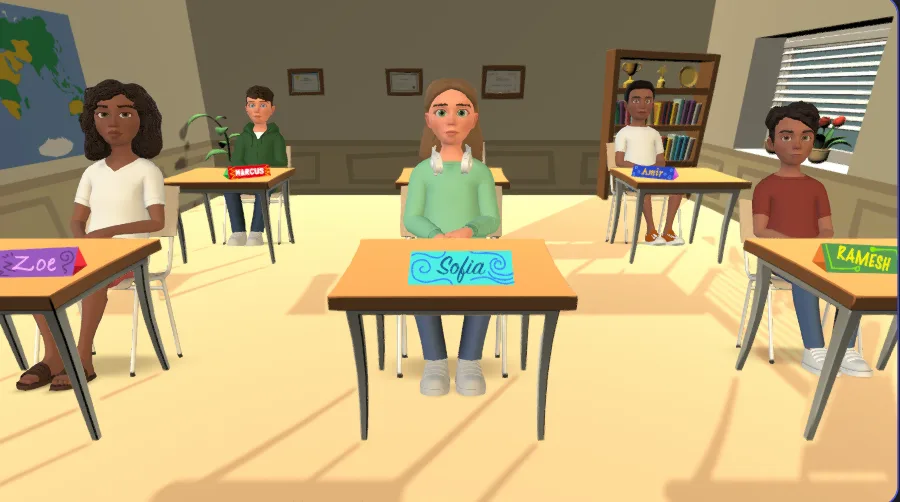
Sofia: “Could getting HIV mean you can't have kids?”
Sofia: “So people who get HIV can still have families?”
How do you respond?
This is one decision from the Session 3 simulation, which tracks Engagement and Stigma-Busting across the full scenario. In the real training your choices carry forward, and the classroom responds to the decisions you have already made.
Full coverage of the Making Proud Choices! curriculum: all eight modules
One introductory session plus eight training sessions, one for each MPC module:
Setting the Stage
Facilitating Group Agreements
Navigating the Continuum
Teaching HIV Risk with Confidence
Small Groups, Big Moments
Facilitating Calling Koko
Thinking Under Pressure
Introducing Stop Think Act
Navigating Attitude Activities
Facilitating Honest Conversations
Pregnancy Prevention
Teaching Contraception to Teens
Confidence at the Front of the Room
Facilitating the Condom Line-Up
Practice Makes Prepared
Coaching Refusal and Negotiation Role-Plays
Total estimated time: approximately 8 hours, self-paced, completed in multiple sittings.
Interested in bringing this to your organization? See how it works for schools and organizations.
Ready to build these skills?
Participate in the MPC: VISTA research study and receive the full training plus $300 for your time.
Take the Interest Screener